If you're considering semaglutide for weight loss, you need more than a medication name and a headline result. Our semaglutide weight loss support is built to help you understand whether this treatment fits your health profile, what the evidence actually shows, and how to use it as part of a plan you can maintain.
We help adults explore semaglutide with clear medical context, realistic expectations, and lifestyle-based structure. That matters because FDA-approved semaglutide weight-management use is not a stand-alone treatment. It is used in addition to a reduced-calorie diet and increased physical activity.
Semaglutide weight loss support for adults who want a medically guided plan
Our semaglutide program is designed for adults seeking chronic weight-management support, especially those who may meet the common medical-use framework for obesity, or overweight with a related health condition. Instead of treating semaglutide like a quick fix, we focus on whether it fits your goals, timeline, and long-term weight-management strategy.
Our semaglutide support follows the FDA framework: weight-management use is paired with a reduced-calorie diet and increased physical activity.
If semaglutide is appropriate for you, your plan should cover more than the first dose. Our semaglutide guidance is built around eligibility review, dose progression, lifestyle planning, and follow-up decisions so you know what to expect before you start and while you continue treatment.
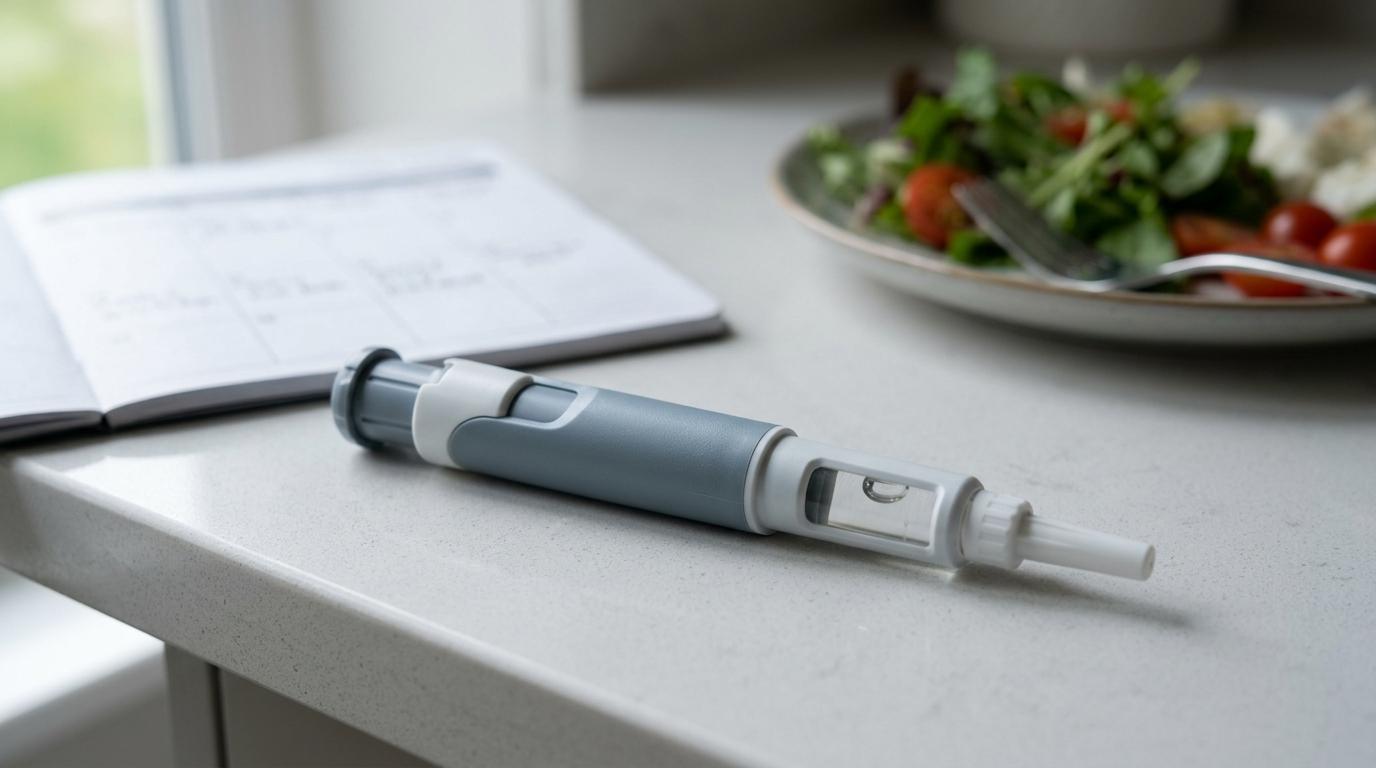
FDA-approved semaglutide for chronic weight management includes once-weekly treatment, with Wegovy labeled at a 2.4 mg maintenance dosage. The injection is supplied in prefilled single-dose pens with strengths that range from 0.25 mg to 2.4 mg, which is why dose planning and check-ins matter early in the process.
Why our semaglutide program pairs medication with diet and activity support
Our semaglutide weight loss support is grounded in the strongest available guidance: medication works best when it is part of a broader program. NIDDK places semaglutide within a larger weight-management toolkit that also includes lifestyle programs and, for some people, surgery, which helps you evaluate the medication in context instead of in isolation.
The clinical evidence is strong during active treatment. In the 68-week STEP 1 trial of 1,961 adults, average body-weight change was -14.9% with once-weekly semaglutide 2.4 mg plus lifestyle intervention, compared with -2.4% with placebo plus lifestyle intervention.
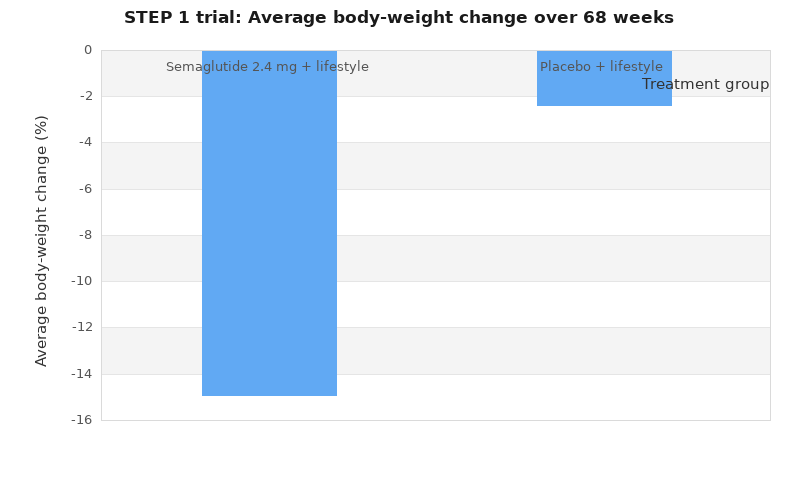
Our semaglutide planning keeps the long view in focus: the STEP 1 trial followed 1,961 adults over 68 weeks, with average weight change of -14.9% during treatment.
For you, that means the right program does two jobs at once. It helps you assess whether semaglutide could meaningfully improve weight-management outcomes, and it gives you structure for food choices, activity habits, and follow-up during the months when most weight loss commonly occurs.
NIDDK notes that most weight loss with prescription weight-management medications takes place within the first 6 months of treatment. Our semaglutide support uses that reality to shape expectations, pacing, and accountability rather than promising a result on a fixed timeline.
Long-term semaglutide planning matters because stopping treatment often changes the outcome
One of the biggest buying concerns around semaglutide is simple: what happens later. Our semaglutide program addresses that question early, because the evidence shows that weight loss during treatment and weight maintenance after treatment are not the same thing.
In the STEP 1 extension study, participants regained about two-thirds of their prior weight loss within one year after stopping semaglutide, and cardiometabolic improvements also moved back toward baseline. That is why our semaglutide guidance emphasizes long-term planning, not just short-term momentum.
Our semaglutide program does not stop at the prescription decision: after withdrawal, trial participants regained about two-thirds of prior weight loss within 1 year.
For many people, this is the deciding factor. If you want to use semaglutide, you should also want a plan for maintenance, reassessment, and the habits that still matter if treatment changes, pauses, or ends.
Semaglutide safety, dosing, and pregnancy planning you should address before starting
Our semaglutide support also helps you think through practical and medical issues before treatment begins. That includes reviewing whether a weekly injection fits your routine, how dose escalation is typically handled, and what questions you need answered about monitoring and side effects.
FDA labeling for Wegovy includes a boxed warning about the potential risk of thyroid C-cell tumors. It also states that semaglutide for weight reduction should be discontinued at least 2 months before a planned pregnancy because of the drug's long half-life, so pregnancy timing is an important part of treatment planning.
You should not have to discover these details after you have already committed. Our semaglutide program is the right fit when you want clear information upfront about candidacy, dosing, safety considerations, and the level of lifestyle change the medication is meant to support.
When our semaglutide weight loss support is the right fit for you
Our semaglutide weight loss support is a strong fit if you want a medically guided option and you are ready to treat weight management as an ongoing process. It is especially relevant if you want help connecting medication decisions with a reduced-calorie diet, increased physical activity, and realistic follow-up expectations.
It may also be the right choice if you are comparing semaglutide with other weight-management paths and want a plan that looks at the full picture. NIDDK guidance makes clear that medication is one tool among several, and the right next step depends on your health status, response to lifestyle change, and long-term goals.
Semaglutide may be a poor fit if you are looking for a stand-alone solution, if you do not want ongoing lifestyle work, or if you are planning pregnancy in the near term. A careful review now can save you time, cost, and frustration later.
Start with a semaglutide eligibility review and a long-term weight-management plan
If you are ready to explore semaglutide, the next step is a focused eligibility and planning conversation. We will help you look at candidacy, dosing expectations, treatment timeline, lifestyle support needs, and what long-term success will require before you decide to move forward.
Reach out to discuss semaglutide weight loss support and program options that match your health goals, your timeline, and the kind of follow-through this treatment deserves.